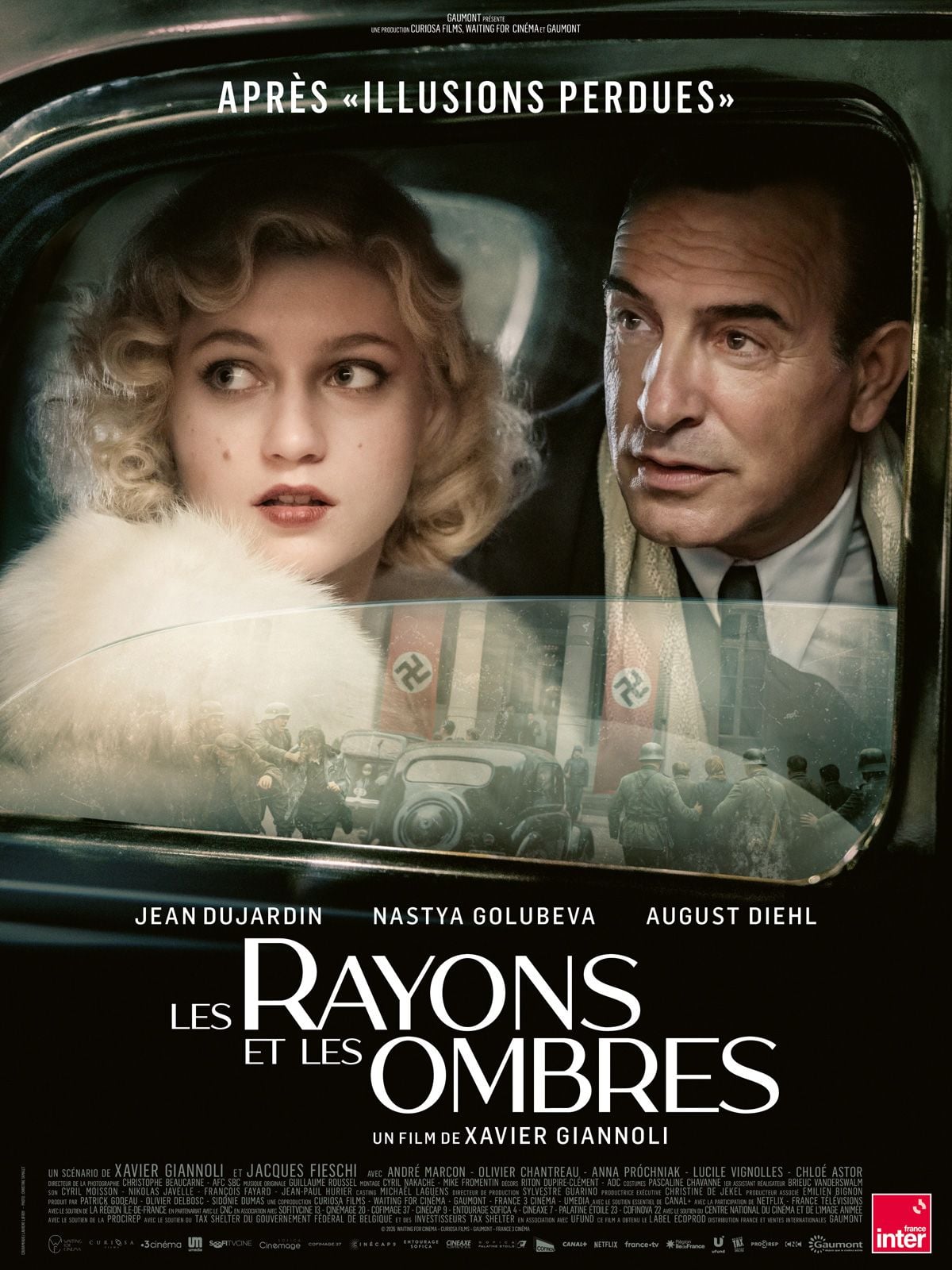
Les Rayons et les Ombres: Xavier Giannoli's Epic Historical Project Promises Profound Reflection
The landscape of French cinema is perpetually rich, but few contemporary filmmakers command attention quite like Xavier Giannoli. Renowned for his meticulous craft and incisive exploration of the human condition, Giannoli is set to captivate audiences once again with his upcoming epic,
Les Rayons et les Ombres (The Rays and the Shadows), slated for release in 2026. This ambitious project, a sprawling historical fresco spanning three hours and fifteen minutes, plunges into the moral ambiguities of France during the Occupation. For anyone following the trajectory of a major
film Xavier Giannoli has undertaken, this promises to be a career-defining work, building on the critical and commercial success of his previous masterpieces like
Illusions Perdues and
Marguerite.
Giannoli, born in 1972, has carved a distinctive niche in French filmmaking, recognized for his ability to blend grand narratives with intimate character studies. His elevation to Chevalier in the Ordre des Arts et des Lettres in 2010 underscored his significant contributions to culture. With
Les Rayons et les Ombres, Giannoli embarks on his most formidable challenge yet, tackling a period fraught with ethical quandaries and profound personal sacrifice, using a title steeped in literary and historical significance.
Unpacking the Title: A Lyrical Legacy for a Historical Epic
The choice of title,
Les Rayons et les Ombres, is immediately striking for its poetic resonance and deep literary roots. It is borrowed directly from Victor Hugo��s seminal 1840 poetry collection, a work that encapsulates the very duality of human existence: the interplay of light and darkness, hope and despair, truth and illusion. Hugo’s collection itself drew inspiration from classical antiquity, referencing Virgil’s *Aeneid* and featuring the poignant poem "Oceano Nox," which speaks to the tragic loss and anonymity of sailors consumed by the unforgiving sea. The opening stanza, "Oh! Combien de marins, combien de capitaines/ Qui sont partis joyeux pour des courses lointaines/ Dans ce morne horizon se sont évanouis..." (Oh! How many sailors, how many captains/ Who left joyful for distant voyages/ Vanished into that bleak horizon...), powerfully evokes themes of fate, oblivion, and the enduring human struggle against overwhelming forces.
By adopting this title, Xavier Giannoli signals his artistic intent for the
film. He is not merely recounting historical events but aiming for a deeper, more philosophical exploration of life's inherent contradictions, particularly within the crucible of war. Just as Hugo sought to blend the bright and dark facets of life, Giannoli’s film promises to examine how individuals navigate profound moral choices when confronted with the extremes of human behavior. The title suggests a narrative rich in symbolism, where characters are perpetually caught between their ideals and the harsh realities that threaten to extinguish their inner light, leading them into the shadows of compromise or ignominy. This profound thematic underpinning is a hallmark of Giannoli's work, ensuring that
Les Rayons et les Ombres will be far more than just a period piece.
The Historical Canvas: France Under Occupation
At the heart of
Les Rayons et les Ombres lies the tumultuous period of the French Occupation during World War II. This setting provides a fertile ground for exploring themes of collaboration, resistance, survival, and moral decay. The
film Xavier Giannoli directs will center on the compelling and tragic real-life figures of Jean and Corinne Luchaire, a father and daughter whose lives exemplify the journey from "light to shadow, from idealism to ignominy."
Jean Luchaire was a prominent journalist and politician who, initially a figure of some renown, became a vocal proponent of collaboration with Nazi Germany during the war. His daughter, Corinne Luchaire, a beautiful and talented actress, also became entangled in the collaborationist circles, her promising career tragically cut short by her association with the regime and her subsequent fall from grace. Their story offers a microcosm of the agonizing choices and devastating consequences faced by many French citizens during this dark chapter.
Giannoli's choice to focus on these two figures, whose descent from societal prominence and initial ideals into a web of moral compromise, offers a powerful narrative arc. It’s a bold move to portray such complex and controversial historical characters, demanding a nuanced approach that avoids simplistic judgments. Instead, Giannoli is likely to delve into the psychological underpinnings of their decisions, the pressures they faced, and the gradual erosion of their moral compass, ultimately illustrating how personal conviction can shatter under the weight of political and social upheaval. This unflinching gaze into human fallibility during extraordinary times is a recurring strength in Giannoli’s filmography.
Xavier Giannoli's Signature: Crafting Compelling Narratives
Xavier Giannoli’s reputation precedes him, making the anticipation for
Les Rayons et les Ombres particularly acute. His filmography showcases a director and screenwriter with a remarkable ability to craft narratives that are both aesthetically stunning and intellectually stimulating. From the poignant humor of
Quand J'étais Chanteur (2006) to the existential quest in
L'Apparition (2017), Giannoli consistently delivers films that resonate long after the credits roll.
His most recent acclaimed work,
Illusions Perdues (2021), an adaptation of Balzac’s novel, earned him widespread praise for its lavish production, sharp social commentary, and masterful storytelling, winning seven César Awards. Similarly,
Marguerite (2015), a moving character study of a delusional opera singer, garnered critical acclaim for its empathetic portrayal of a woman living in her own unique reality. These films demonstrate Giannoli’s prowess in handling complex characters, intricate historical settings, and profound human drama – all essential ingredients for the success of
Les Rayons et les Ombres.
As a screenwriter, adaptor, and even producer, Giannoli's multifaceted involvement in his projects ensures a coherent and deeply personal vision. He co-wrote the screenplay for
Les Rayons et les Ombres, just as he has for most of his directorial features, ensuring that the thematic depth and character nuances are meticulously woven into the fabric of the story. His dedication to authenticity and emotional truth is what makes each
film Xavier Giannoli creates a significant event in contemporary cinema. To understand the full scope of his creative journey, one might explore
Xavier Giannoli: From Lost Illusions to His Creative Film Journey, or delve into the breadth of his talents as seen in
Director, Screenwriter, Producer: Xavier Giannoli's Diverse Film Career.
Why "Les Rayons et les Ombres" Promises to Be a Landmark Film
The convergence of an epic runtime, a charged historical period, complex real-life characters, and Giannoli's proven directorial genius positions
Les Rayons et les Ombres as a potentially landmark achievement in French cinema. A three-hour-plus runtime is a significant commitment for both filmmaker and audience, but it allows for the kind of nuanced character development and immersive historical detail that a story of this magnitude demands. Giannoli can delve deeply into the psychological states of Jean and Corinne Luchaire, meticulously charting their trajectory from a position of relative idealism to one of ignominy. This extended canvas enables him to explore the subtle shifts in allegiance, the rationalizations, and the moral compromises that define their fall.
Audiences can expect Giannoli’s characteristic attention to period detail, lavish set designs, and powerful performances that bring the past vividly to life. Beyond the spectacle, however, the film is poised to provoke thought and debate, challenging viewers to confront uncomfortable truths about human nature and the capacity for moral ambiguity during times of crisis. It offers not just a historical recounting but a profound meditation on the choices individuals make when faced with impossible circumstances, making it exceptionally relevant even today. The exploration of how a nation grapples with its collective memory of collaboration and resistance is a crucial aspect of French cultural identity, and Giannoli’s film is set to contribute significantly to this ongoing dialogue.
Ultimately,
Les Rayons et les Ombres is shaping up to be more than just a historical drama; it is an ambitious artistic statement from a filmmaker at the peak of his powers. It’s an opportunity for audiences to experience an unflinching look at one of history’s most challenging periods through the lens of individual tragedy and moral complexity, delivered with the poetic depth implied by its very title.
Conclusion
As the release date for
Les Rayons et les Ombres draws closer, anticipation within the global film community continues to build. Xavier Giannoli’s decision to tackle such a dense and significant historical period, filtered through the lens of a profoundly symbolic title and the complex lives of real figures, underscores his commitment to cinema that is both entertaining and intellectually stimulating. This upcoming
film Xavier Giannoli has poured his considerable talent into promises to be a powerful and unforgettable experience, solidifying his reputation as one of France's most essential cinematic voices and offering a lasting contribution to the historical drama genre.